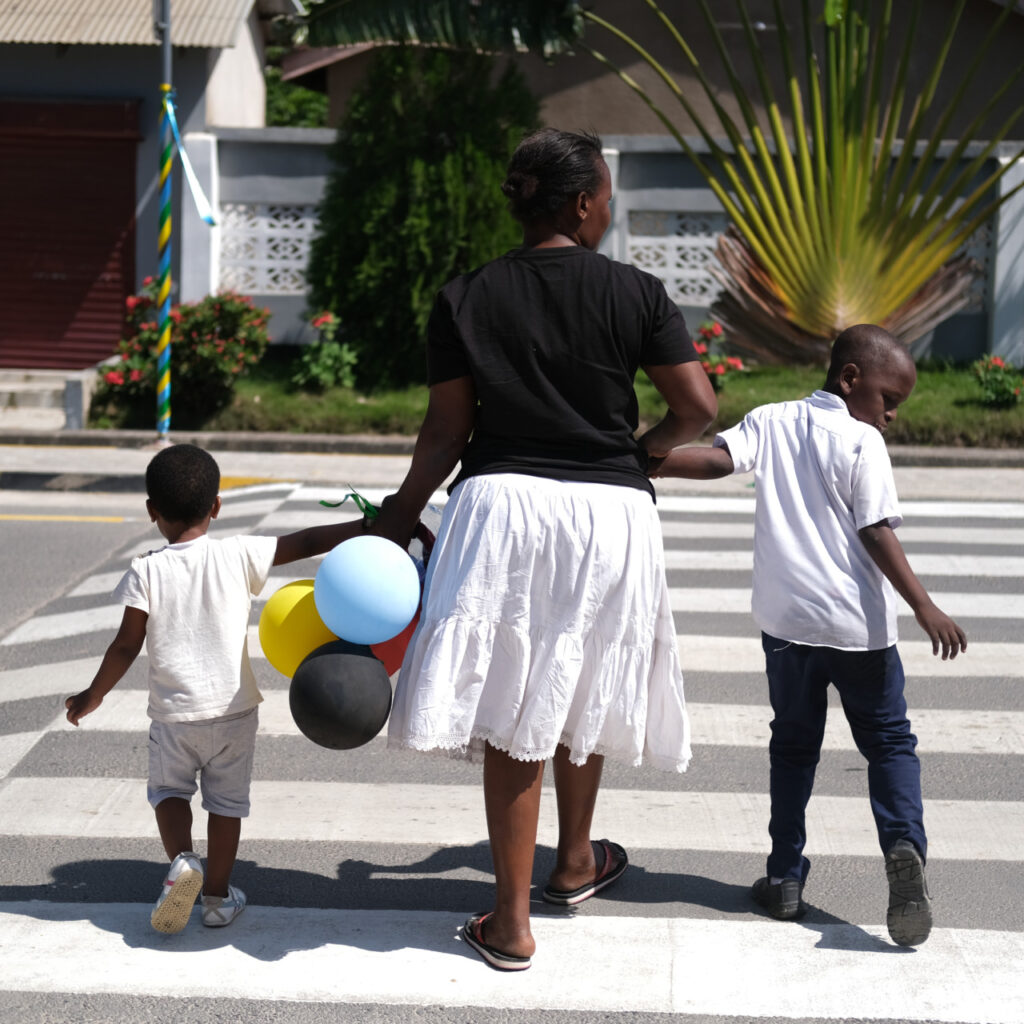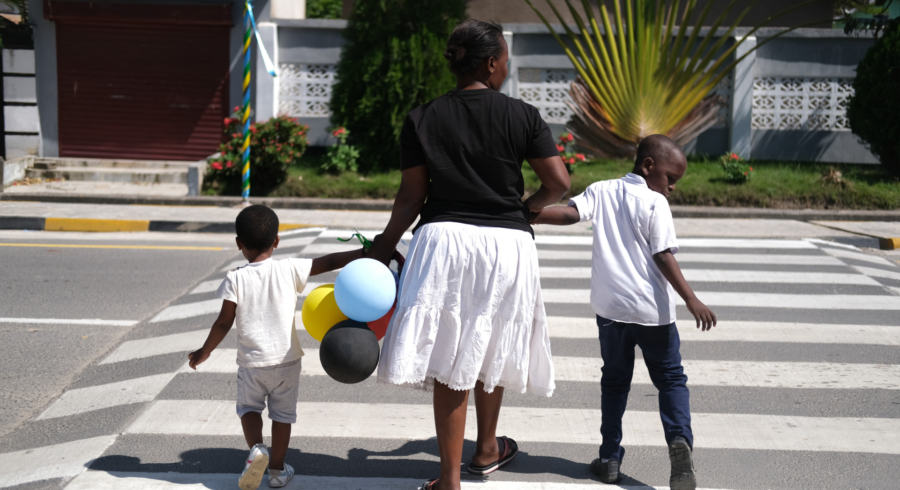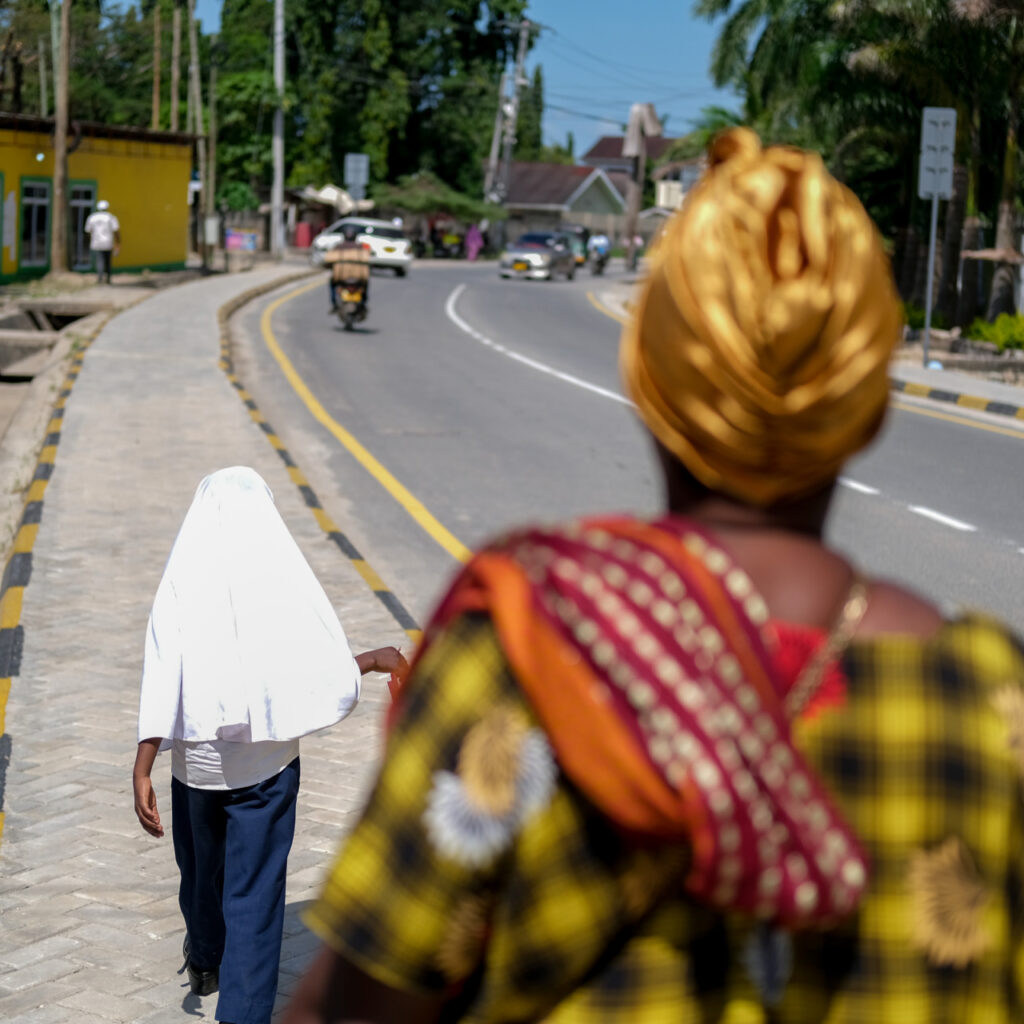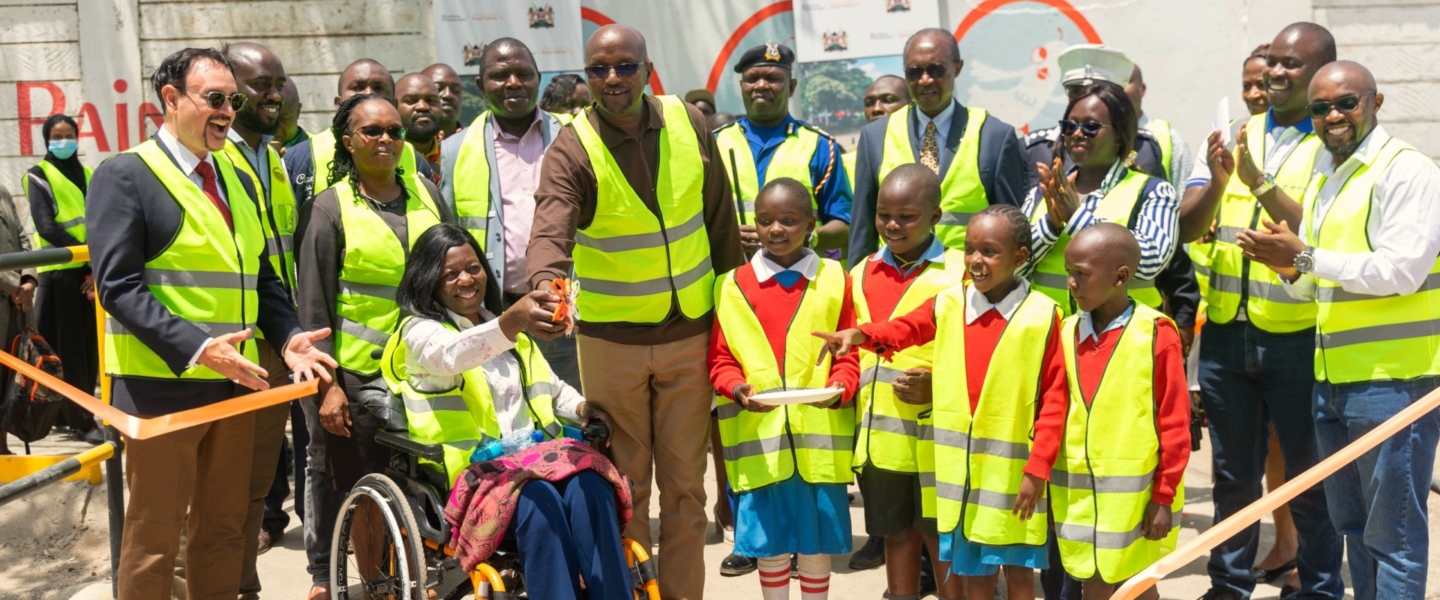
On 7 October 2026, Amend and its partner ASIRT Kenya (Association for Safe International Road Travel Kenya) officially opened a new Safe School Zone at Mwangaza Primary School in Kayole, Nairobi, Kenya. The project was delivered with the Kenya Urban Roads Authority (KURA) and the National Transport and Safety Authority (NTSA), with funding from the Bloomberg Philanthropies Initiative for Global Road Safety.
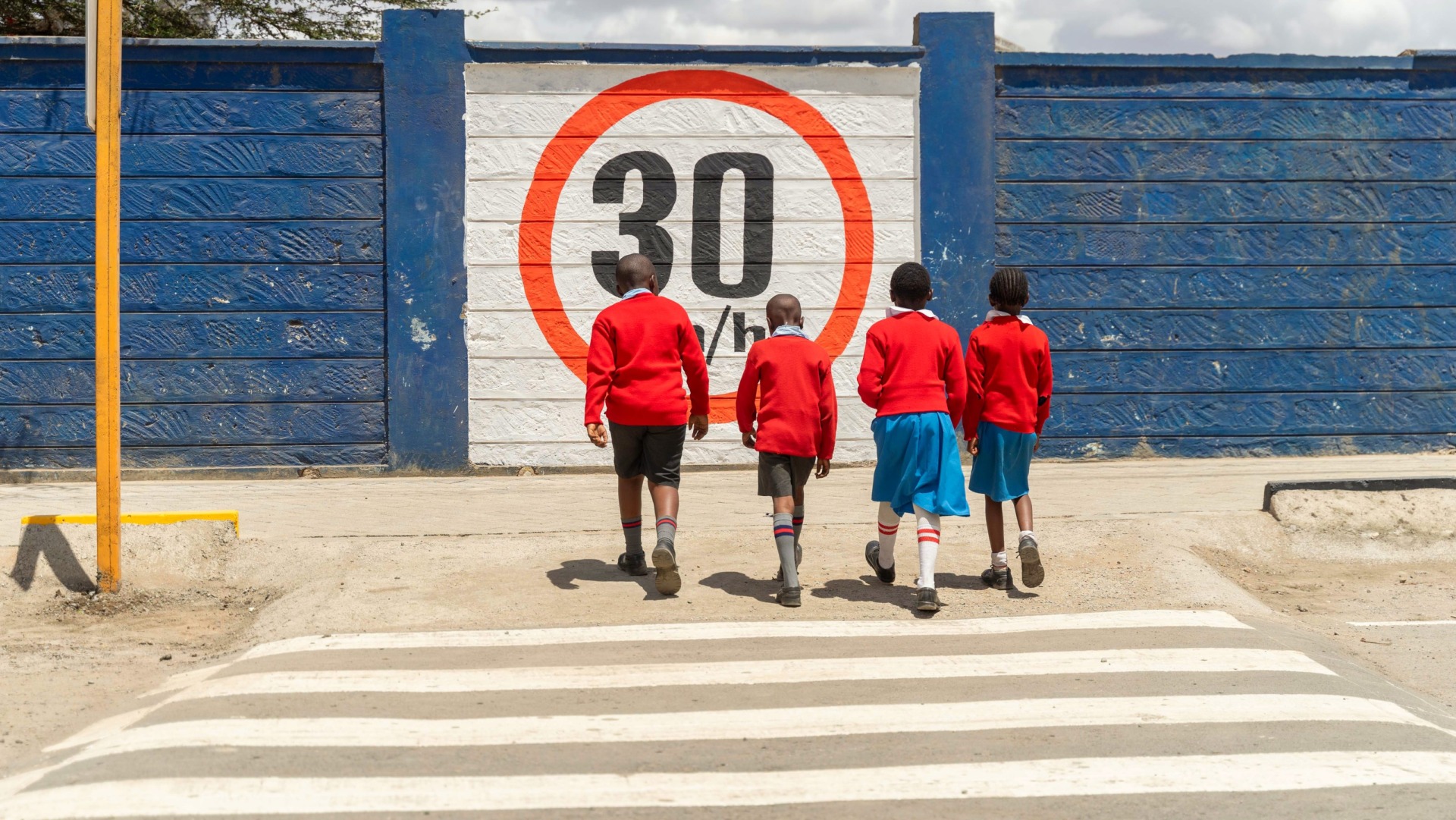
The new crossings, speed bumps and protected walkways are designed to separate learners from traffic and keep vehicle speeds below 30 km/h wherever children and vehicles meet. They serve the school’s 2,712 learners, as well as the parents, residents and other pedestrians who use the same roads every day.
Why Mwangaza Primary School?
Most of Mwangaza’s learners walk to and from school. In 2025, a Grade 4 learner was killed in a road crash near the school, and several other children have been injured since. The school was identified as a high-risk site and selected as one of Amend’s Safe School demonstration projects in Kenya.
The danger these children face reflects a national pattern. According to NTSA figures reported by The Standard, 4,458 people died on Kenya’s roads in 2025, and pedestrians made up the largest group of victims, with 1,685 deaths. Nairobi recorded more road deaths than any other county between January and October 2025.
Worldwide, road traffic injuries are now the leading cause of death for children and young people aged 5 to 29. UNICEF estimates that nearly 220,000 children and adolescents are killed in road crashes each year, more than 600 every day. Africa bears the heaviest burden. Child road death rates in sub-Saharan Africa are, on average, more than nine times higher than in Europe and Central Asia.
Vehicle speed largely determines whether a child survives a collision. A pedestrian struck at 30 km/h has around a 10% chance of being killed; at 50 km/h, the risk rises above 80%. This is why every measure at Mwangaza is designed to bring traffic below 30 km/h at the points where children cross.
An evidence-based approach
The Mwangaza Safe School Zone was designed using Amend’s School Area Road Safety Assessments and Improvements (SARSAI) methodology. SARSAI won the WRI Ross Prize for Cities in 2019, and a peer-reviewed evaluation published in Injury Prevention found a 26% reduction in road traffic injuries among children at schools in Dar es Salaam, Tanzania, that received the programme.
Each Safe School Zone project starts with a detailed assessment of the school area. At Mwangaza, the team mapped the routes learners take to school and the points where they cross the road, measured how fast vehicles travel, and consulted teachers, parents and learners themselves. These findings shaped a package of low-cost, proven measures built around two principles: keep children apart from motorised traffic, and slow vehicles to below 30 km/h where the two cannot be separated.
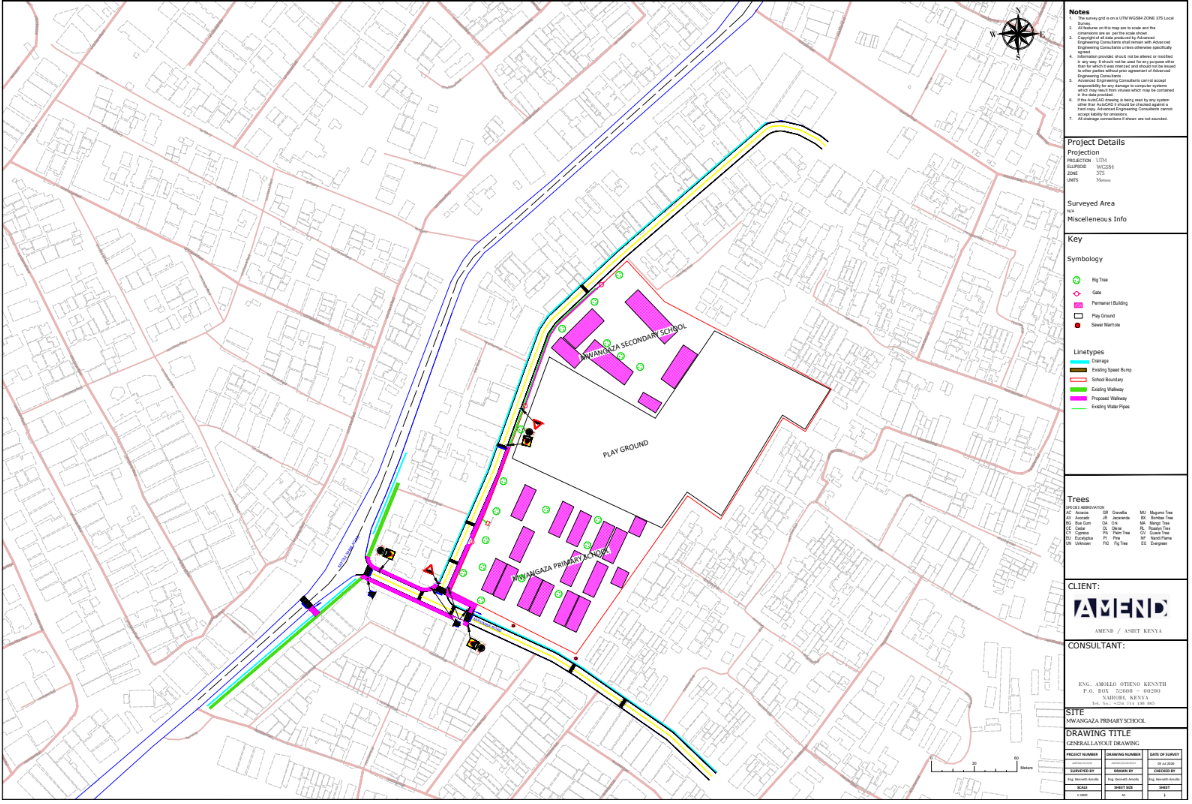
What the new Safe School Zone includes
- Pedestrian crossings: two raised crossings and four zebra crossings at the busiest crossing points around the school, slowing vehicles and giving learners a clear, safe place to cross.
- Speed bumps: eight asphalt concrete speed bumps to hold traffic at safe speeds along the school’s approach roads.
- Walkways: 300 metres of pedestrian walkways, 2 metres wide, so that children no longer have to walk in the carriageway.
- Drainage crossings with handrails: reinforced concrete slabs over the roadside drains at two key points, fitted with handrails, giving safe access to the new walkways.
- Road signs: fifteen signs, including school zone and 30 km/h speed limit signs.
- Road markings: thermoplastic edge lines, centre lines, zebra crossings and school zone markings.
A model for safer school journeys in Kenya
Developed with KURA and NTSA, Mwangaza is one of Amend’s demonstration sites in Kenya: a working Safe School Zone that partners can see, learn from and build on as they bring safer school journeys to more schools across the country.
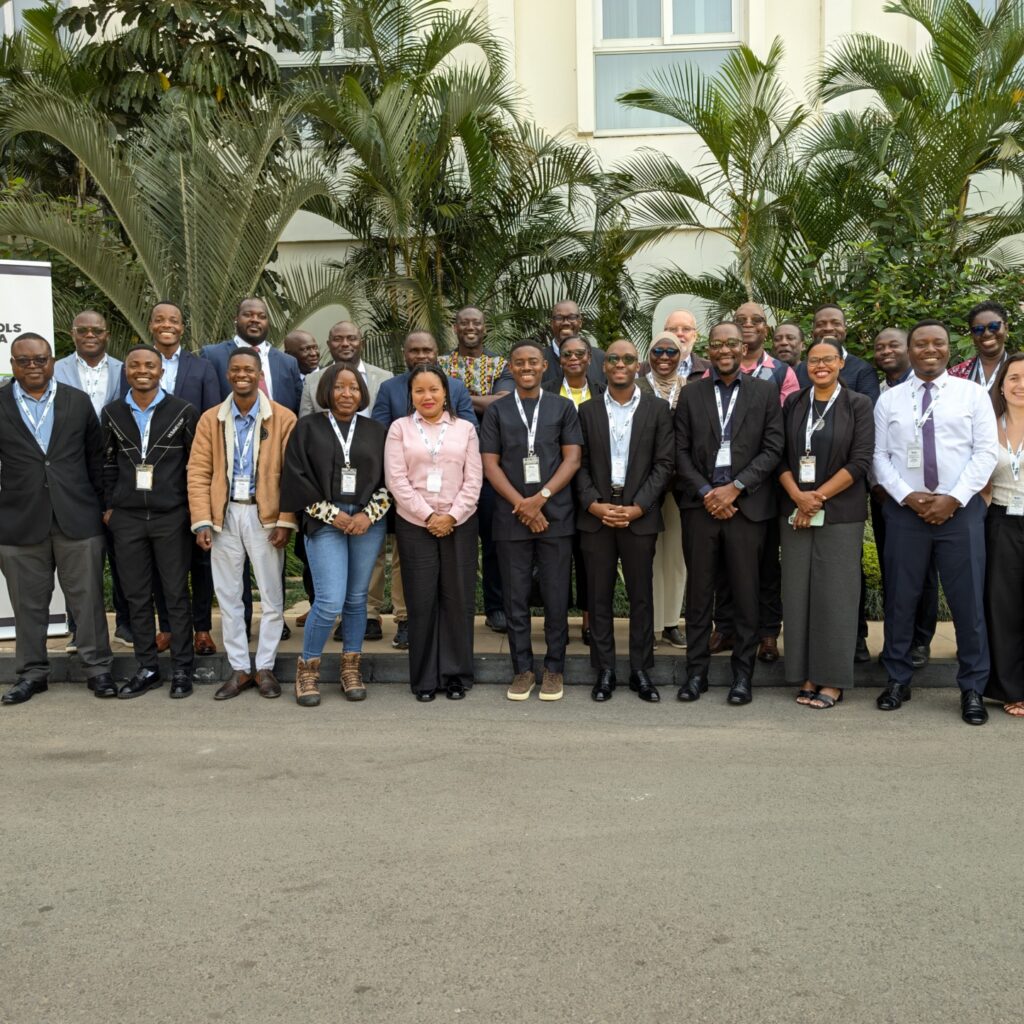
That is why the ribbon-cutting on 7 October brought road users and decision-makers to the same place. After Eng. Wilson Tikwa of KURA cut the ribbon, officials from NTSA, the Kenya National Highways Authority (KeNHA), Nairobi City County and the Ministry of Education walked the new walkways and crossings with learners, parents and teachers, following the routes children now take to school.
“Every child deserves a safe journey to and from school,” said Eng. Tikwa. He described Mwangaza as proof of what is possible when children are put at the centre of street design, adding that safer school zones make whole communities safer.
For Amend, the aim is for Mwangaza to become the rule rather than the exception. Dr Alex Guerrero, Amend Board Member, said:
As a trauma surgeon, I’ve operated on far too many children injured on our roads, and Africa has the world’s highest road traffic injury rates. Protecting children, our most vulnerable road users, demands a deliberate shift in how we design our streets. Safe School Zones cannot remain a luxury or an afterthought; they must be standard for every school in Kenya and across Africa.