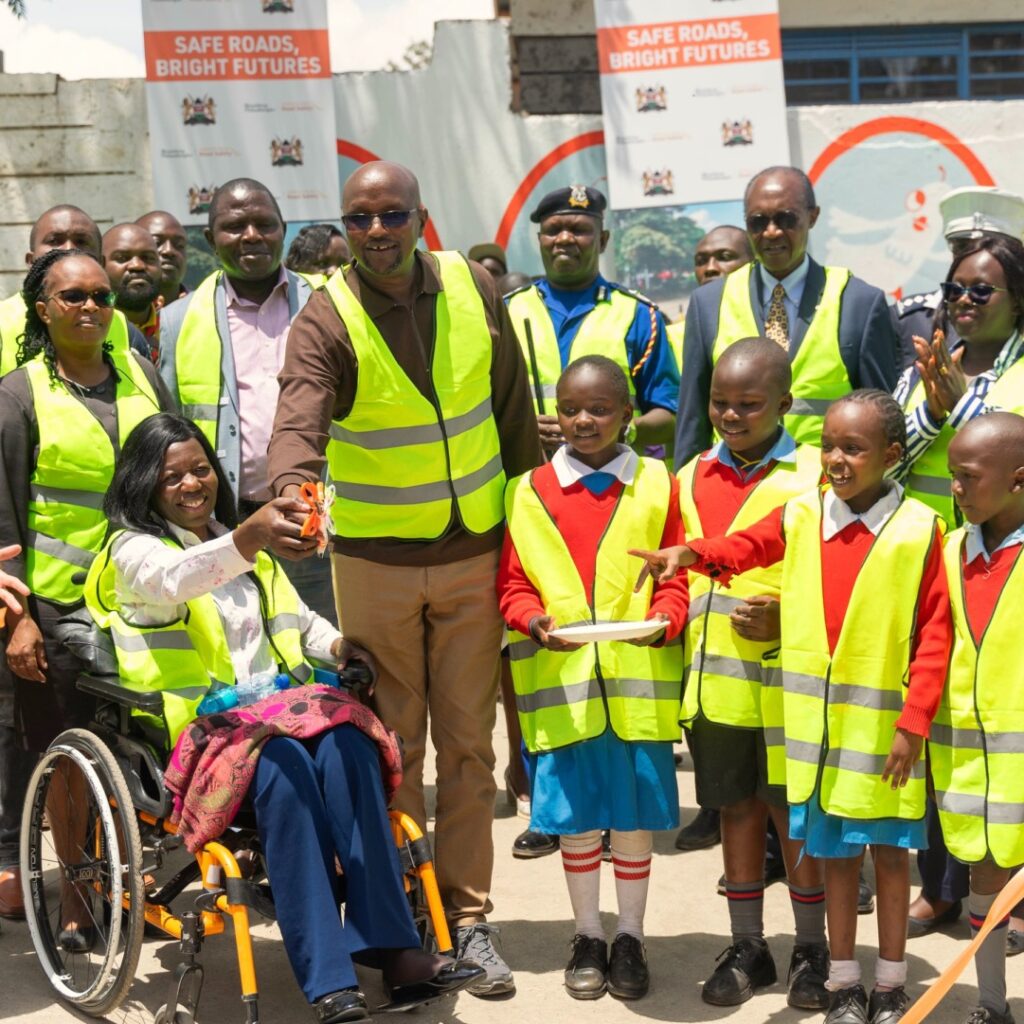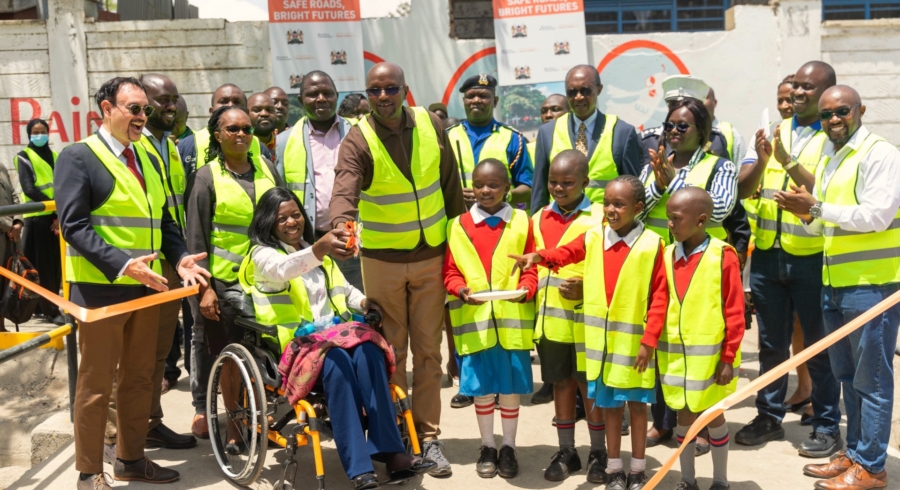
In the first week of November in Madagascar, Amend showed what Safe Schools Africa looks like in practice. On November 3 in Antananarivo, development banks, international partners and Malagasy authorities met at a roundtable to discuss how to keep children safe on Madagascar’s roads, drawing on Amend’s child road safety assessment of Route Nationale 6 (RN6), a national road in the north of the country. Three days later, children, parents and officials gathered at École Primaire Publique (EPP) Manakambahiny, a primary school in the capital, to open a new Safe School Zone.
Scaling Safe Road Infrastructure for Children in Madagascar: Lessons from RN6 & Strategic Priorities for Future Roads
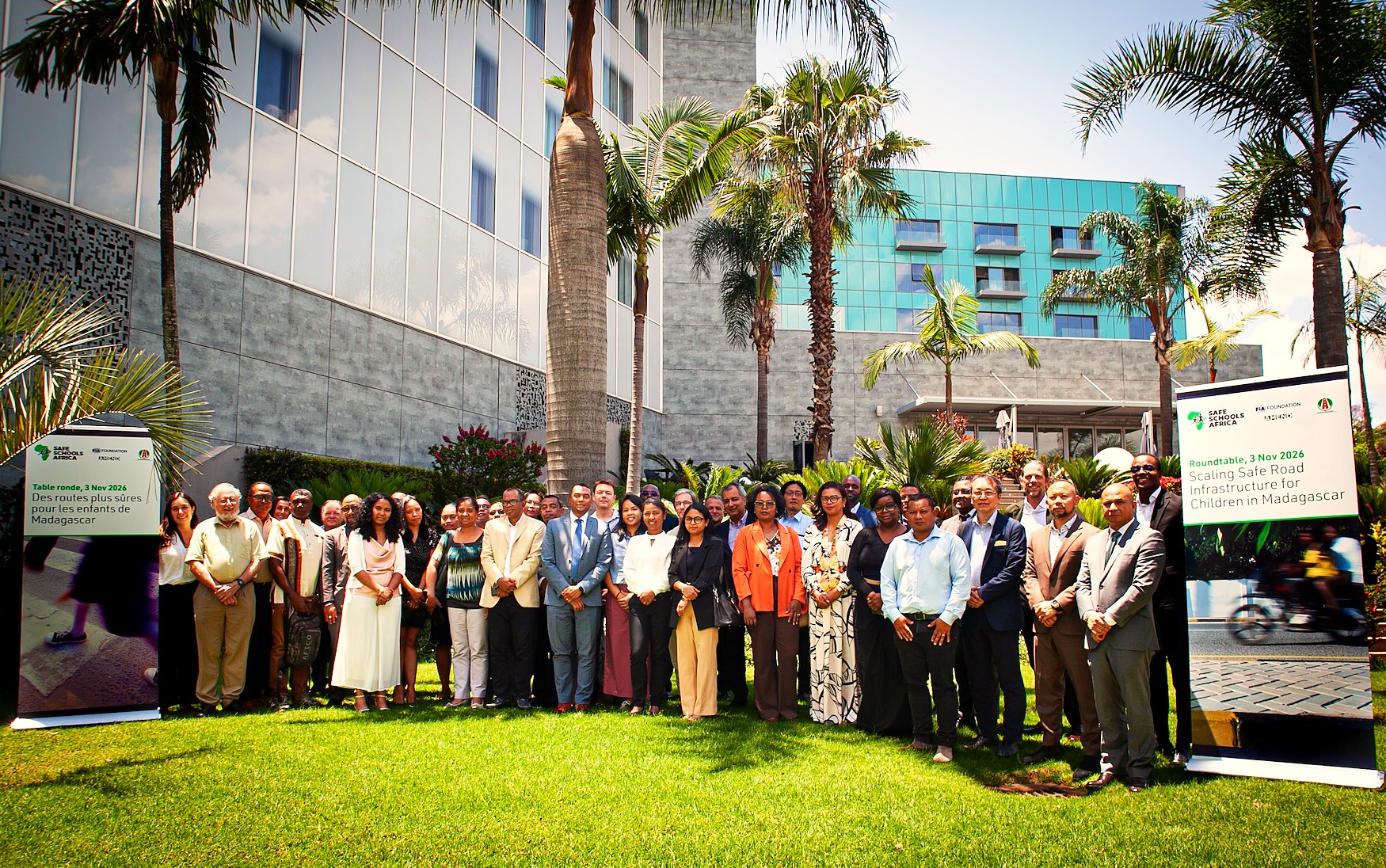
The roundtable, hosted by Amend, the FIA Foundation and the Agence Routière de Madagascar in Antananarivo, brought together 40 participants, including representatives from the European Union Delegation, the Agence Française de Développement (AFD), the TYPSA Foundation, iRAP, CODATU and Amend’s local partner, the NGO Lalana. Malagasy authorities were represented by the Commune Urbaine d’Antananarivo, the Ministries of Public Works and National Education, the Directorates General of Land Transport and Road Safety, and the National Police. Atsani Ariobowo, Director of Child and Youth Health at the FIA Foundation, opened the session by setting out the scale of child road deaths worldwide, across Africa and in Madagascar. That set up the question on the table: how to make children’s safety a standard part of every new road in Madagascar.
The answer started with evidence from Amend’s work on the RN6. On the section of the road financed by the European Investment Bank (EIB) running south from Antsiranana (Diego Suarez), in the far north of the country, Amend’s team worked with Lalana and the Agence Routière, with support from the FIA Foundation and the TYPSA Foundation, to implement Amend’s Safe Schools Africa technical assistance at nine schools along the road. Over a month in the field, we met with the Agence Routière leadership, TYPSA, the contracting engineers for this section of the road, the construction firm COLAS, school directors and local stakeholders. In classrooms, we mapped where pupils live, how they get to school and whether they cross the RN6, and gathered accounts of past crashes. On the road, we ran speed surveys and used drone footage to track pedestrian and vehicle movements at school gates and pinpoint where children and traffic come into conflict.
The findings were stark. Almost every rural pupil walks to school, and around half cross the RN6 to get there. At Mahagaga, the fastest 15% of vehicles passed the schools at 68 km/h or more. At Mahavanona, where rumble strips are in place, that figure was 49 km/h. Both are far above 30 km/h, the speed at which children have a good chance of surviving a crash: a pedestrian hit at 30 km/h has around a 10% risk of being killed, and at 50 km/h the risk is around 85%. At EPP Anivorano-Nord, where all 752 pupils walk, a single 30-minute drone survey counted 211 children crossing the road at the school gate.
Amend’s recommendations for each school are low-cost and practical: school zone signs and a 30 km/h limit, raised crossings and junctions to slow traffic, and clear sightlines so drivers and children can see each other, backed by training for motorcycle and bajaj drivers, enforcement and road safety education. Every stakeholder welcomed them. They have now been approved, and the infrastructure will be built in the coming months by local contractors, financed by the EIB.
A panel moderated by Amend Executive Director Jeffrey Witte then turned to what comes next. Christophe Rakotomavo, Director General of the Agence Routière, Lydia Razafindrahona of AFD Madagascar and road safety expert Nathalie Chiavassa, representing the TYPSA Foundation and iRAP discussed how to bring the same approach to the other road projects now under way across the country.
Pierre Sarrat of the EIB said of the project on the RN6:
This initiative fits squarely within the EIB’s road safety priorities and its environmental and social standards, particularly the safety of the most vulnerable road users. It has been a particularly rich source of operational lessons, showing the importance of carrying out this kind of analysis more systematically and earlier in the project cycle. Beyond the RN6, it is a source of inspiration for our future operations, and shows how targeted interventions can complement infrastructure investment and help make roads safer for everyone.
RN6 at the PIARC seminar
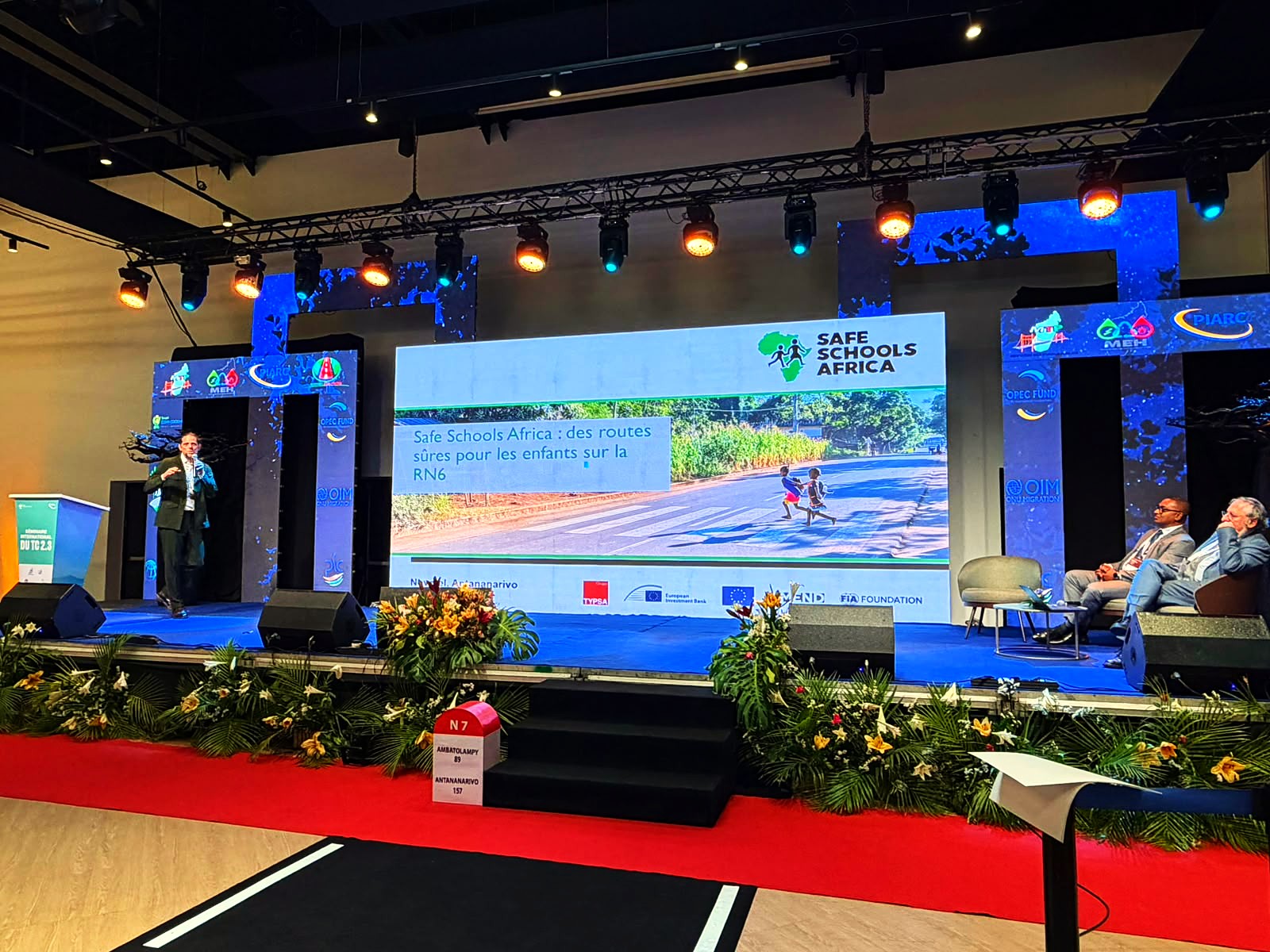
The RN6 work also reached an international audience. Jeffrey Witte presented the assessment and its lessons during the main proceedings of the PIARC (World Road Association) international seminar, held at the Novotel Antananarivo on November 4th and 5th and co-organized by the Ministry of Public Works, the Agence Routière and Lalana.
A new Safe School Zone at EPP Manakambahiny
EPP Manakambahiny’s 575 pupils go to school on a busy, curving road about 3 km from the center of Antananarivo. Nine in ten walk to school, and more than half cross the road outside the gate. When Amend surveyed the school in September, 522 vehicles passed during the 30 minutes of afternoon dismissal, half of them motorcycles, some reaching 69 km/h. The school has recorded eight crashes involving its pupils since 2024. One 12-year-old, hit by a motorcycle weaving through traffic outside the gate, no longer crosses the road alone. An adult was recently killed in traffic in front of the school.
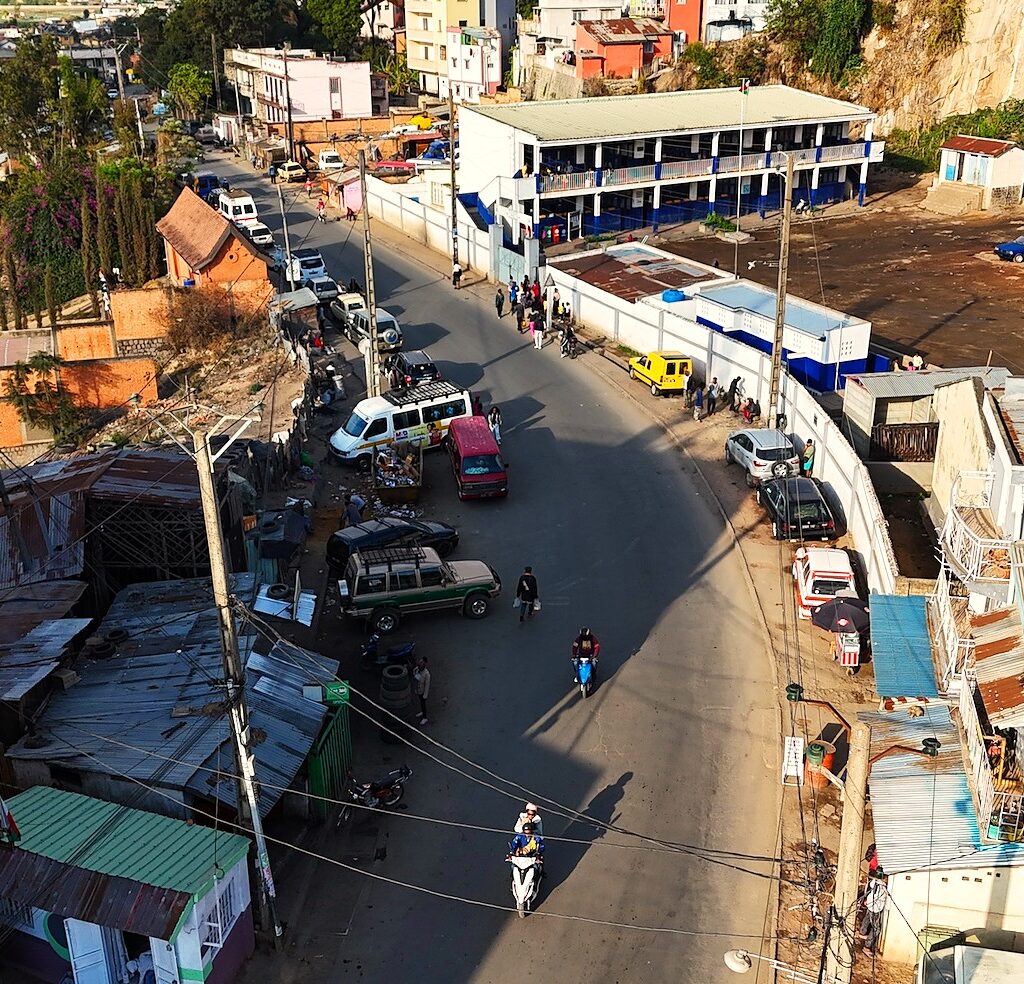
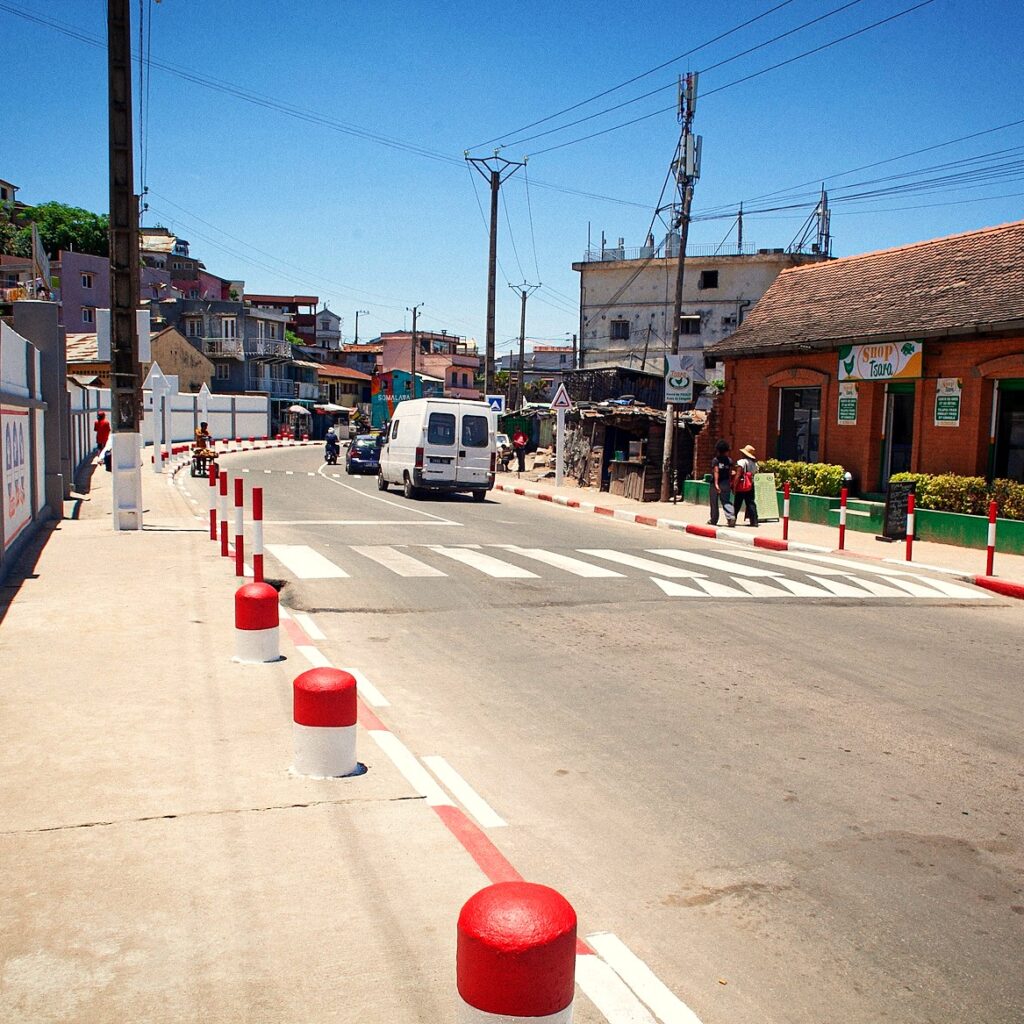
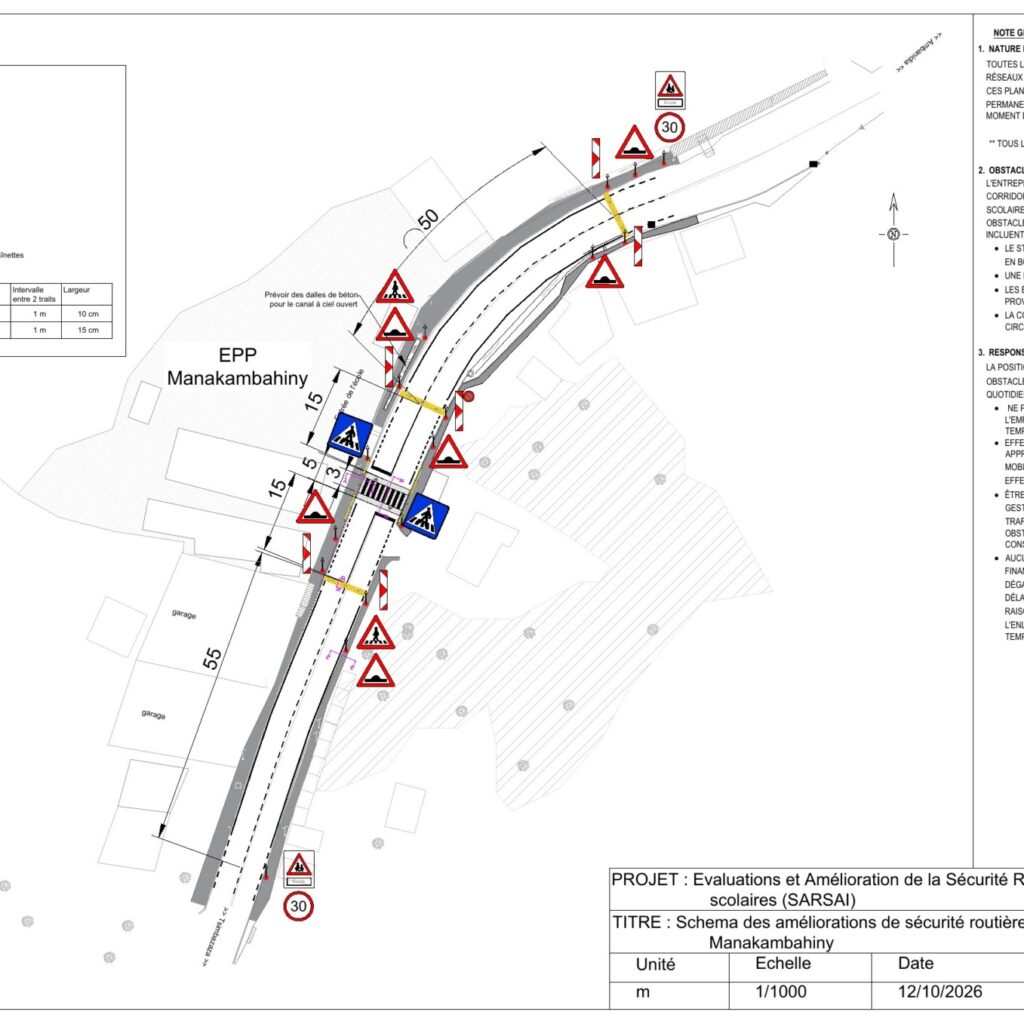
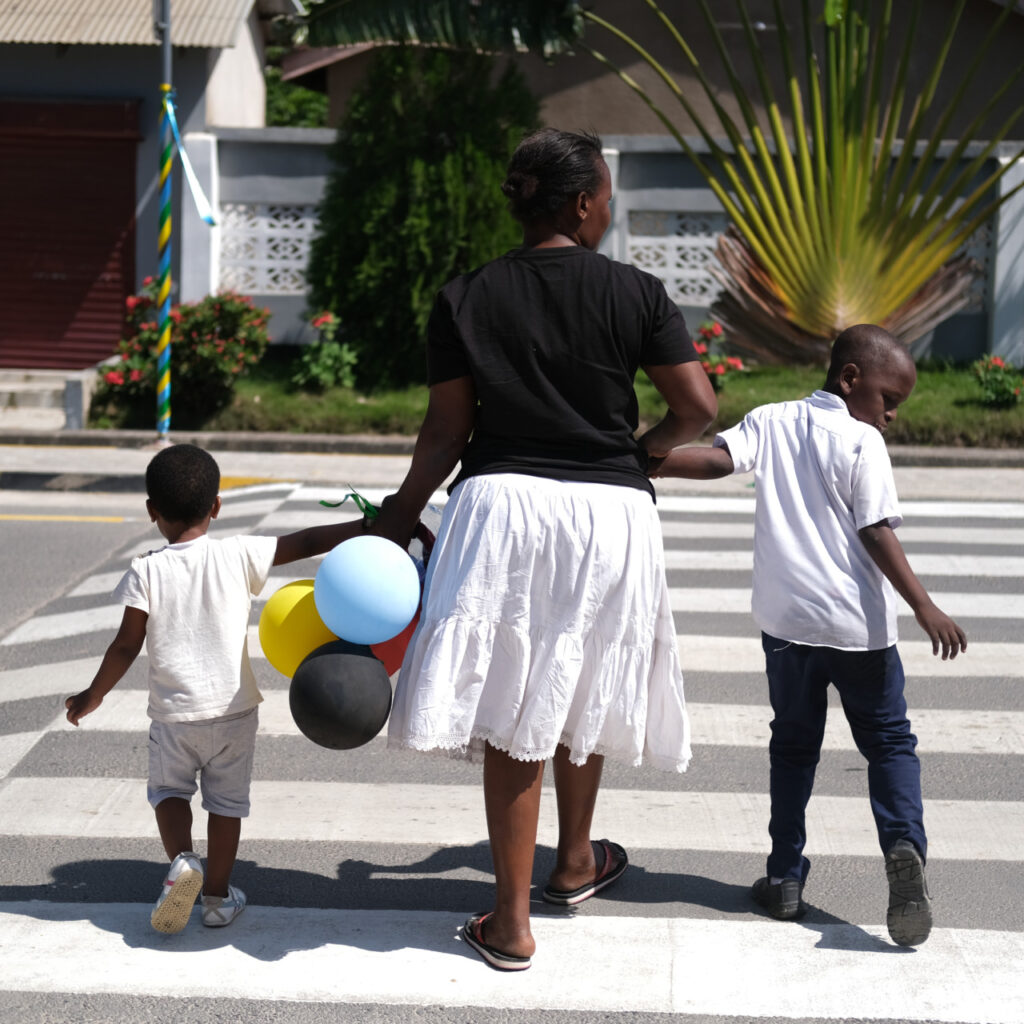
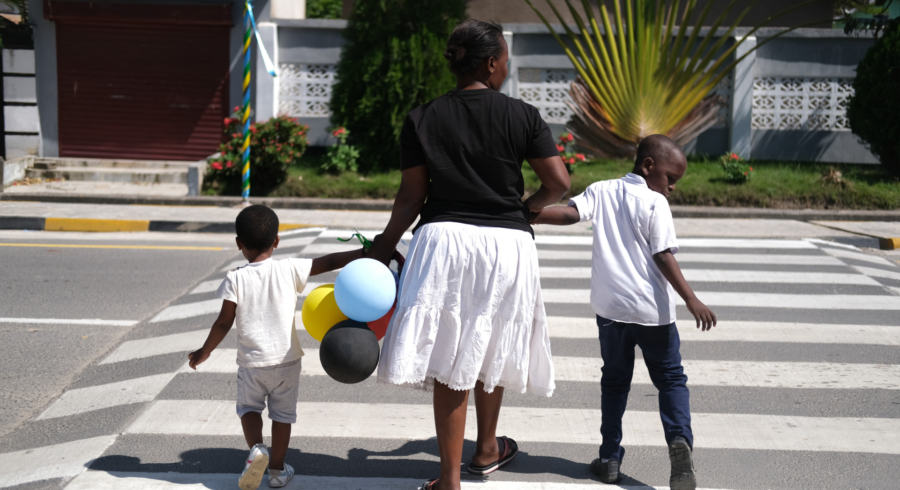
The new Safe School Zone gives children – and the rest of the community – a safer walk near the school:
- A raised crossing at the school gate, with a speed bump on each side to slow traffic on both approaches.
- Around 280 meters of sidewalk, so children no longer walk in the road.
- Around 12 signs, including school zone and 30 km/h signs, and new road markings.
The works were completed at lightning speed, in under two weeks, and the community is thrilled: families and neighbors are already walking on the new sidewalks and crossing the road at the new raised crossing.
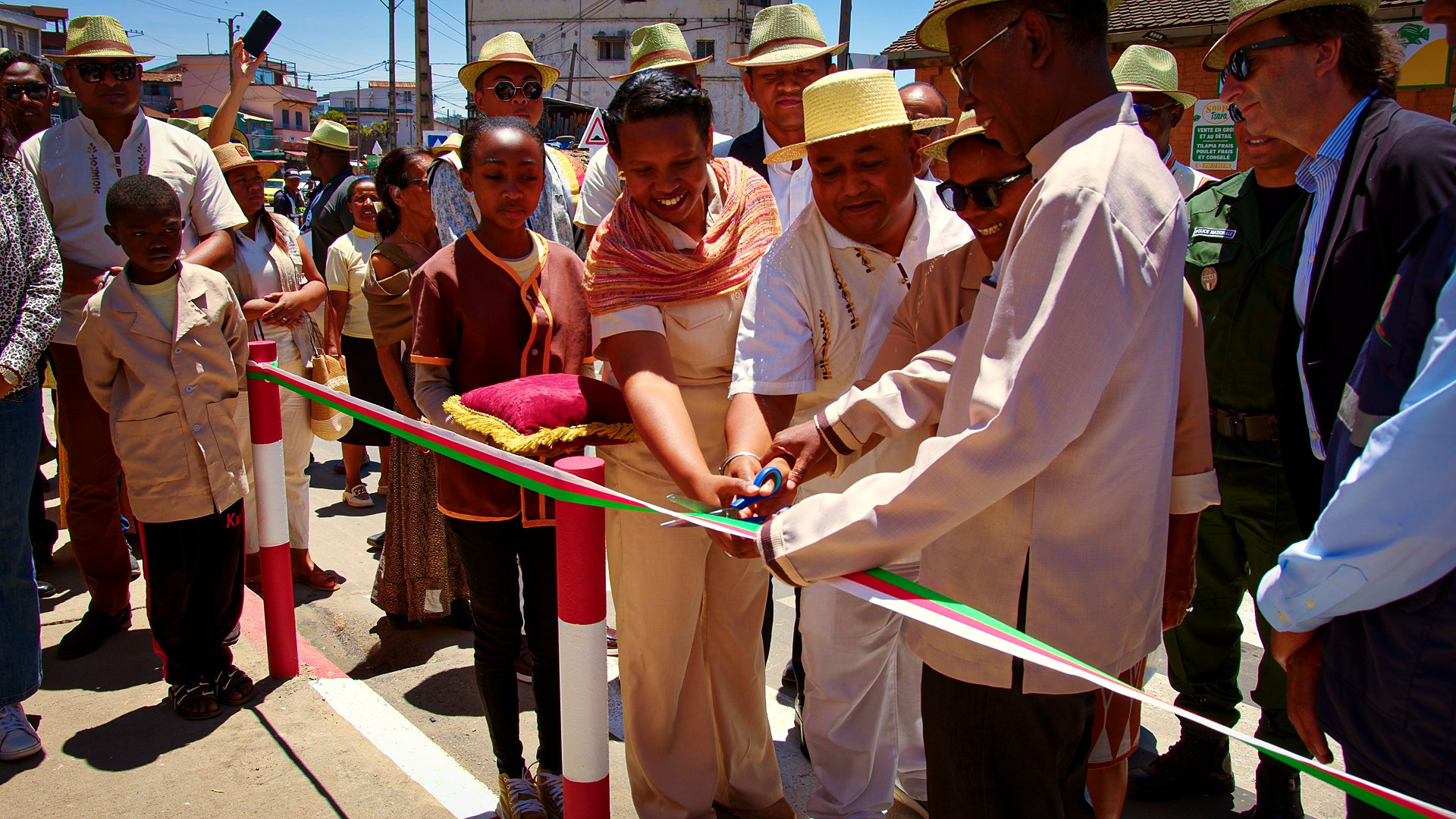
Around 70 pupils attended the ceremony, joined by more than 30 adults, among them engineers from the PIARC seminar on their field visit. Officials from the Agence Routière, the Commune Urbaine d’Antananarivo, the Ministry of National Education and the FIA Foundation joined the school’s director, parents and the Lalana and Amend teams for the ribbon-cutting. Then the pupils took over and showed their guests how to use the new crossing safely.
For Christophe Rakotomavo, Director General of the Agence Routière, the lesson is clear:
A safer journey to school should be the standard, not the exception.
The breadth of Safe Schools Africa
The week showed the two ways Safe Schools Africa works. On the RN6, Amend’s technical assistance shaped a road financed by a development bank, and its recommendations will soon be built. At EPP Manakambahiny, Amend put infrastructure in place directly to protect children at a high-risk school now. Both rest on the same evidence and the same aim: slowing traffic and separating children from vehicles wherever they walk to school.
We are proud to support Amend, TYPSA Foundation, EIB and the Government of Madagascar in upholding the Rights of Children to be safe in their journeys to school. We shall continue to work with our partners in ensuring the sustainability and scale-up of this work in this great and unique island-nation. – Atsani Ariobowo, FIA Foundation
Everyone who took part last week, from the Agence Routière and Malagasy ministries to the EIB, AFD, the European Union and the FIA Foundation, is committed to scaling this work up across Madagascar. None of it is the work of one person or one organization. But what has been achieved in Madagascar so far shows how much one committed person inside an organization can change, and Madagascar now has those people at every link in the chain: in government, at the financing institutions, among the engineers and at Amend. That team is what will carry safe school journeys from the RN6 and Manakambahiny to roads and schools across the country.