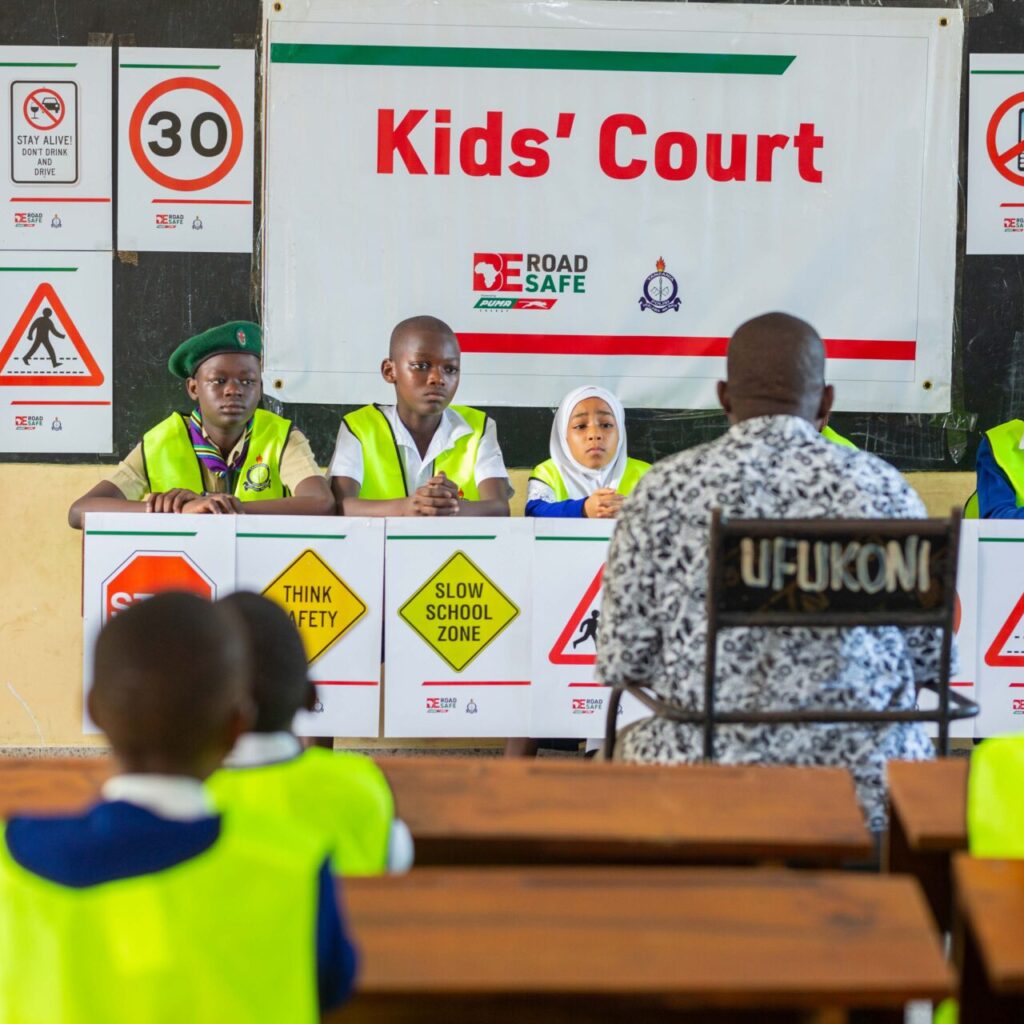
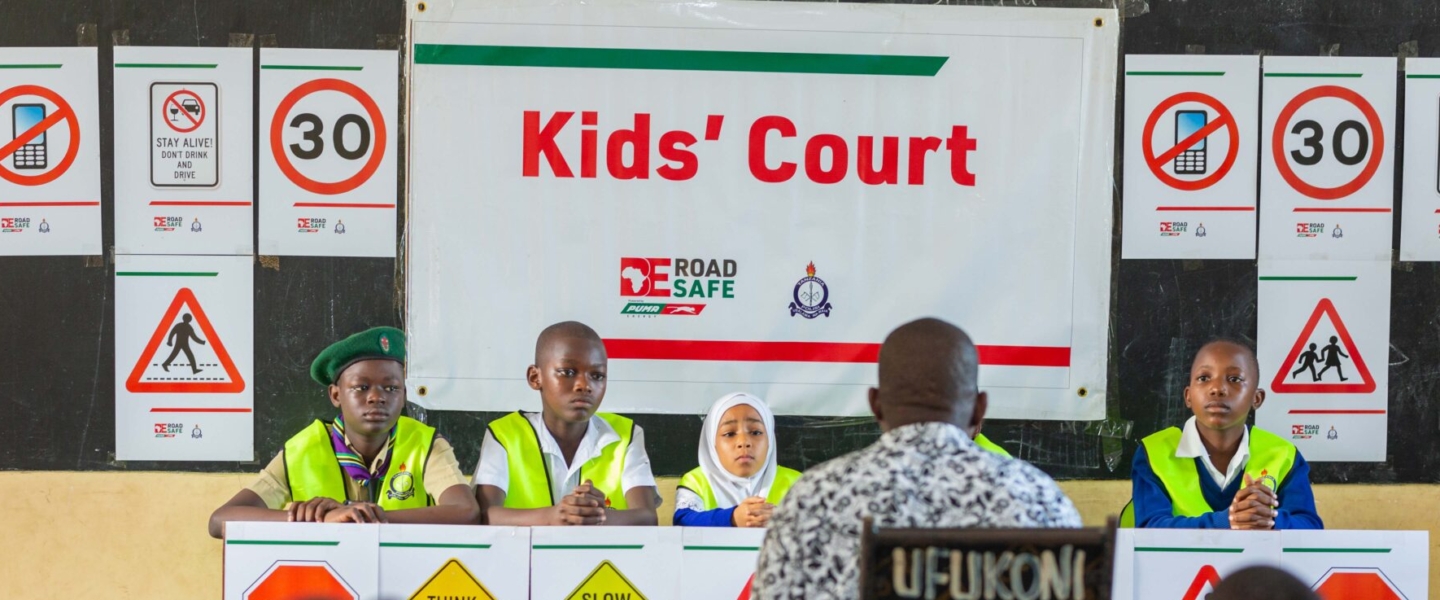
Across sub-Saharan Africa, a novel approach to road safety is turning the tables on traffic offenders. Amend’s Kids’ Court program empowers primary school students to act as “judges,” questioning drivers caught committing traffic violations outside their schools.
This isn’t just a mock trial; it is a scientifically evaluated intervention that bridges the gap between law enforcement and community engagement. To date, we have successfully implemented Kids’ Court in dozens of schools across Botswana, Ghana, Mozambique, South Africa, Tanzania, Zambia, and Zimbabwe.
What is Kids’ Court?
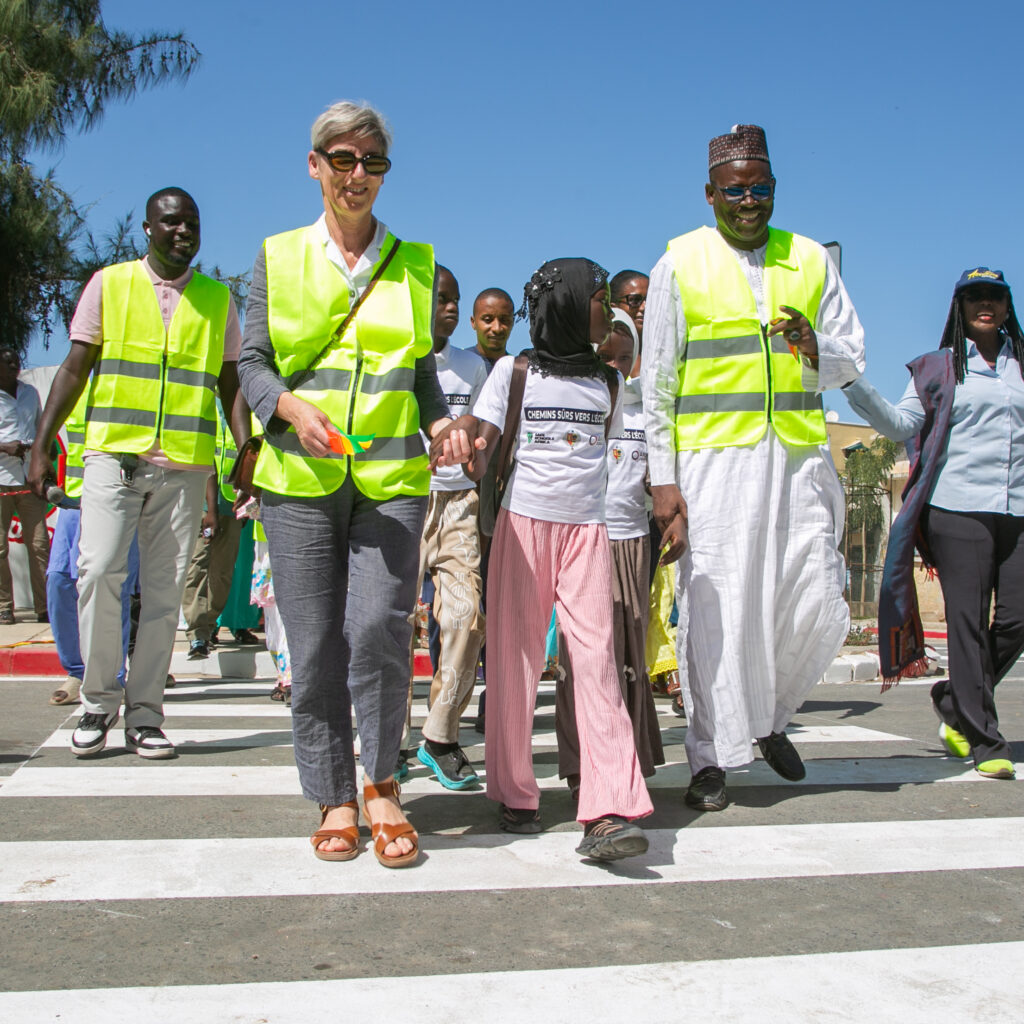
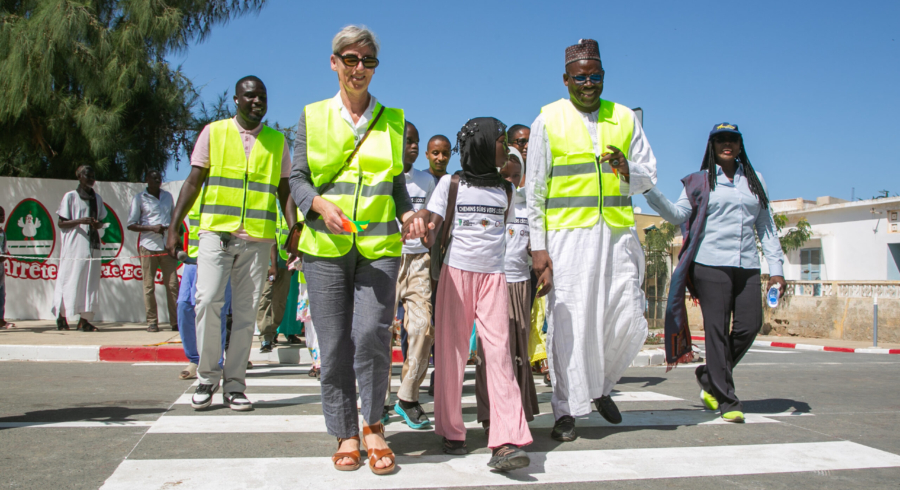
The process begins by training primary school students on critical road safety issues and evidence-based safety measures. We then collaborate with the Traffic Police, who pull over drivers committing infractions in front of a school. These include speeding, talking on a mobile phone, or failing to wear a seatbelt.
Drivers are presented with a choice: pay a fine or immediately face the Kids’ Court. If they choose the Kids’ Court, they are escorted into the school to face a panel of child “judges” who rhetorically interrogate them about their behavior. At the conclusion of the “trial,” the driver is required to sign a pledge committing to drive safely around schools.
Why Everyone Loves Kids’ Court
The program has garnered widespread support from diverse stakeholders because it transforms a standard police interaction into a powerful, humanizing experience:
- Communities: Parents and teachers see children taking ownership of their safety, turning potential victims into active stakeholders who can influence driver behavior.
- Traffic Police: Officers gain a unique tool for enforcement that goes beyond simple fines and receives positive feedback from national safety councils.
- Governments & Officials: Agencies like TARURA (the Tanzanian government roads agency) and the World Bank value the program for its ability to foster positive public engagement and educate future road users.
Proving the Impact: A Significant Reduction in Offenses
The following data is derived from a rigorous randomized controlled study, the results of which are expected to be published soon in a peer-reviewed journal. The study has shown that Kids’ Court is more effective at reducing the number of repeat traffic offenses than regular enforcement methods. This study compared drivers who participated in Kids’ Court against a control group undergoing standard police enforcement, with the following findings:
- Less Repeat Offending (Recidivism): Drivers who participated in Kids’ Court committed 17.4% fewer total repeat offenses over a 12-month period compared to the control group.
- Delayed Reoffending: The time to the first repeat offense was significantly longer for the Kids’ Court group: 150 days compared to 115 days for the control group.
- Statistically Significant: These results were found to be statistically significant, proving the program has a measurable impact on reducing dangerous driving behavior.
In short: Kids’ Court works.
Expanding the Vision: The Kids’ High Court
We are now extending the success of Kids’ Court through our Kids’ High Court. This initiative shifts the focus from individual drivers to the organizations and systems that fund and build our roads.
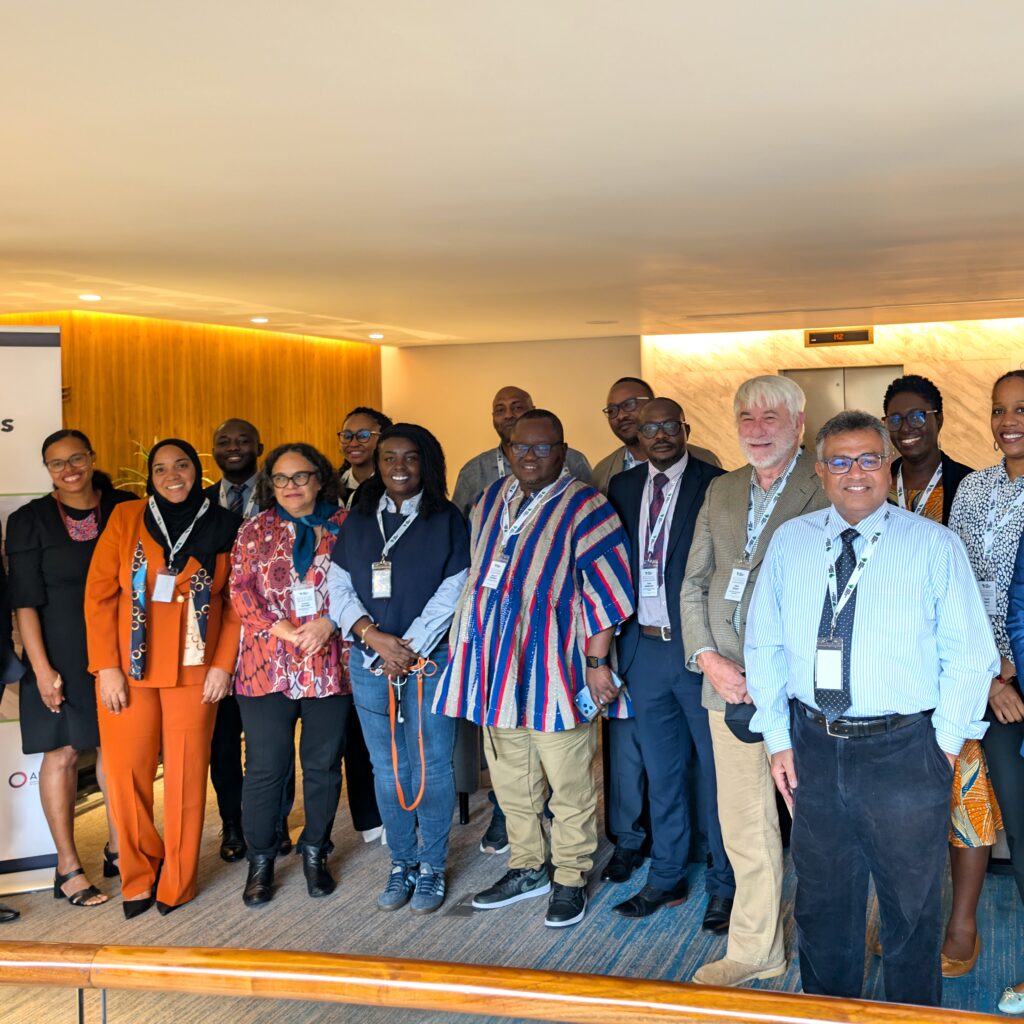
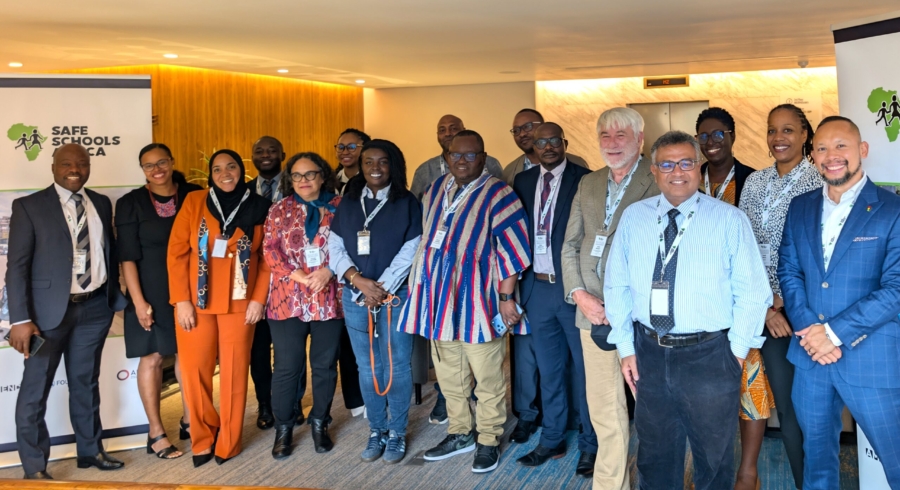
In Tanzania, students from schools in Dar es Salaam have engaged directly with engineers and contractors working on World Bank-financed road projects. Through this panel, children have provided feedback on the $330 million DMDP 2 project, advocating for features like raised zebra crossings, pedestrian walkways, and clear signage for students with special needs.
A Complement to Systemic Change
Kids’ Court and the Kids’ High Court are not replacements for systemic changes like infrastructure design and construction; rather, they are essential complements. While we work to make sure roads are designed and built safely, these programs ensure the community is engaged in an interactive, attention-grabbing way that highlights the human cost of road safety. By putting children at the center of the conversation, we ensure that the roads of tomorrow are designed for the people who use them most.